Recipes · Uncategorized

WW2 Recipe: Baby Ruth Cookies

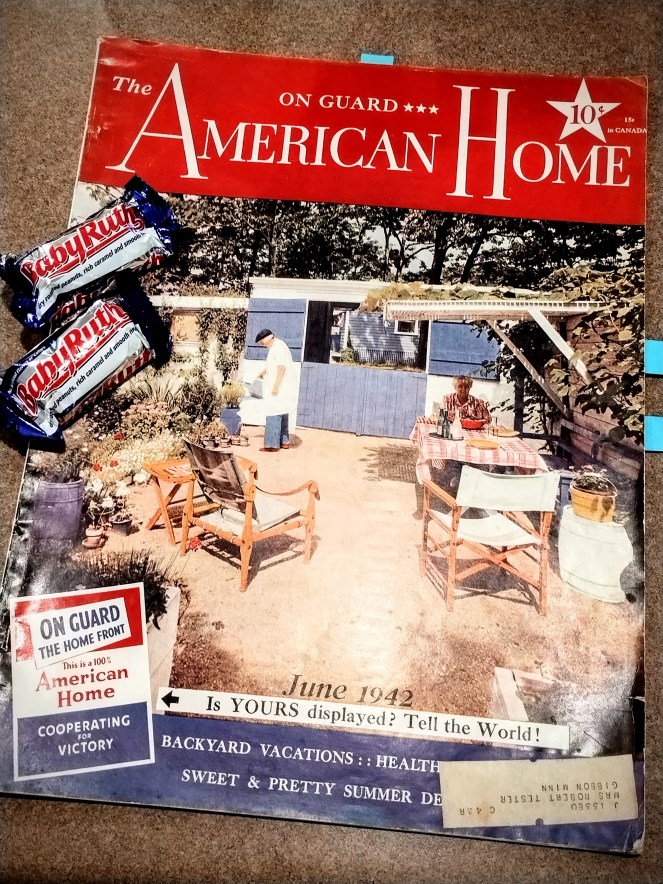
Flipping through the June 1942 issue of The American Home is like walking into a World War Two time capsule. Featuring the “On Guard the Home Front: Cooperating for Victory” label, it offered suggestions for how to use rationed items frugally, how to save items that would otherwise go to waste, and how to save money on family vacations by camping and other home-made fun (see the PDF link at the end to explore the pages of this issue).  
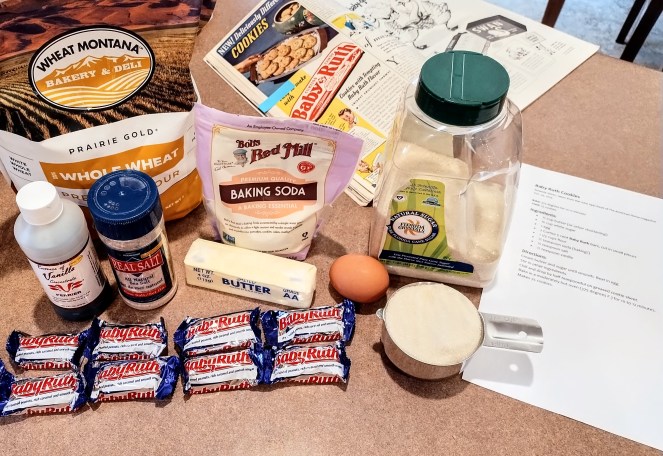
Sugar was rationed early on in America and chocolate was prioritized for use for military rations, so it was difficult to find. As a result, recipes like the one on page 26 of the June issue, featured a colorfully advertised Baby Ruth candy bar as the main ingredient in a cookie. Eating a Baby Ruth bar on its own wouldn’t take long. However, chop it into pieces and incorporate it into a cookie recipe (think chocolate chip cookies), and you have a treat that will go much further and be enjoyed by the maximum number of people.

Otherwise, the recipe is a basic, tasty cookie that goes well with a tea or coffee break. Pair a couple of cookies with a cheese stick or beef stick if you want to avoid a woozy-doozy blood sugar spike. The cookie itself uses a bit less sugar than modern cookie recipes, and this you can adjust even more to reduce the sugar profile. Most of the sweetness comes from the Baby Ruth bar. You could experiment with other candy bar flavors in the same manner, a Snickers cookie, a Skor bar cookie (toffee and chocolate), etc. Some candy bars may work better than others, I’m thinking Three Musketeers would melt in a messy fashion.
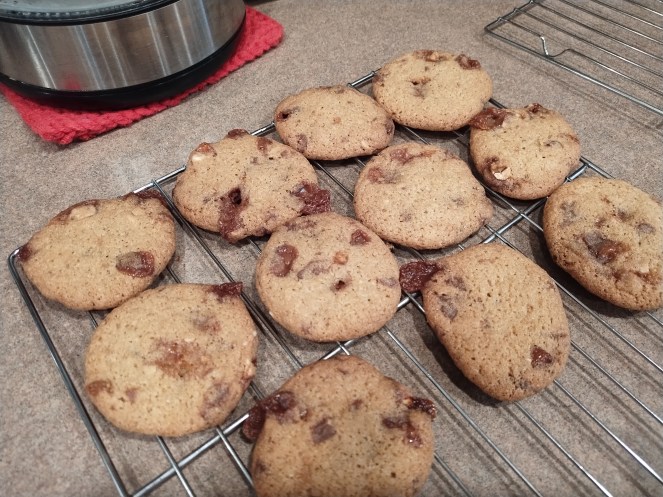
There is a small drawback to using a candy bar as your “chocolate chip” substitute since Baby Ruth features a milk chocolate exterior, peanuts, caramel, and a nougat filling. The caramel is the challenge; it really melts and will ooze in strange and wonderful ways as the cookies bake. It’s relatively easy to fix, just smoosh the goo back into the cookie while the cookie is still warm. Possibly the 1942 version of the Baby Ruth bar was made from a different recipe and didn’t have this problem (I’m not brave enough to see if a 1942 bar has survived that I can try), but nonetheless, in our modern-day version you have to mind your caramel.
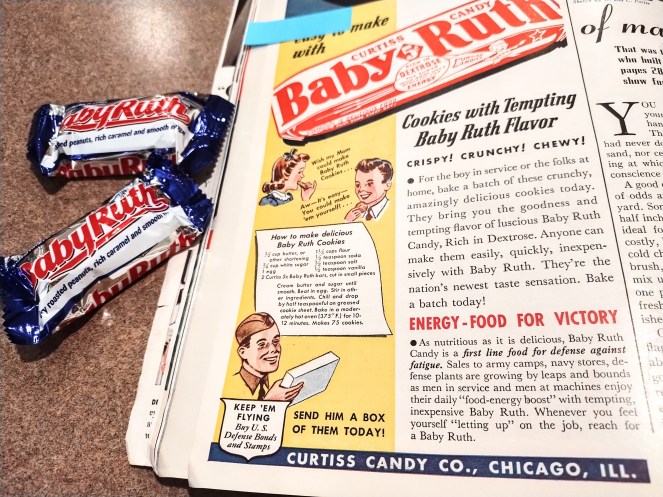
Dubiously, the Baby Ruth bar from the magazine is featured thus: “As nutritious as it is delicious, Baby Ruth Candy is a first line food for defense against fatigue.” Hmm, if you’re a hungry soldier fresh from basic training then I can buy that (and they were back during 1942), but for our sedentary world today, probably going easy on the candy bars is a better bet.

I won’t keep you in too much suspense, here’s the recipe. I’ve adapted it to my taste, but you can follow the original in the images above.

Baby Ruth Cookies
  • Print

Adapted by Amanda Stiver from the June 1942 issue of The American Home magazine.

Ingredients

  • 1/2 cup butter
  • 3/4 cup granulated sugar
  • 2 small eggs
  • 8 mini-Baby Ruth bars, cut in small pieces
  • 1 1/3 cups flour (I used Wheat Montana: Prairie Gold)
  • 1/2 teaspoon baking soda
  • 1/2 teaspoon salt
  • 1/2 teaspoon vanilla

Directions

  1. Cream butter and sugar until smooth. Beat in eggs.
  2. Stir in other ingredients (chopped Baby Ruth bars, flour, baking soda, salt and vanilla).
  3. Chill for easy handling. Gently form half teaspoonful balls, roll them slightly, and place on a parchment paper covered cookie sheet. Avoid over-handling or the dough can become tough. The cookies spread out, space them well apart.
  4. Bake at 375 degrees F for 10 to 12 minutes. Let sit for one minute, if caramel has bubbled and spread, gently smoosh it back into the cookie. Place on cooling rock. Makes about 60 small cookies.

Sources:

Consumer Mindset

Subconscious Consumer: What Motivates You?

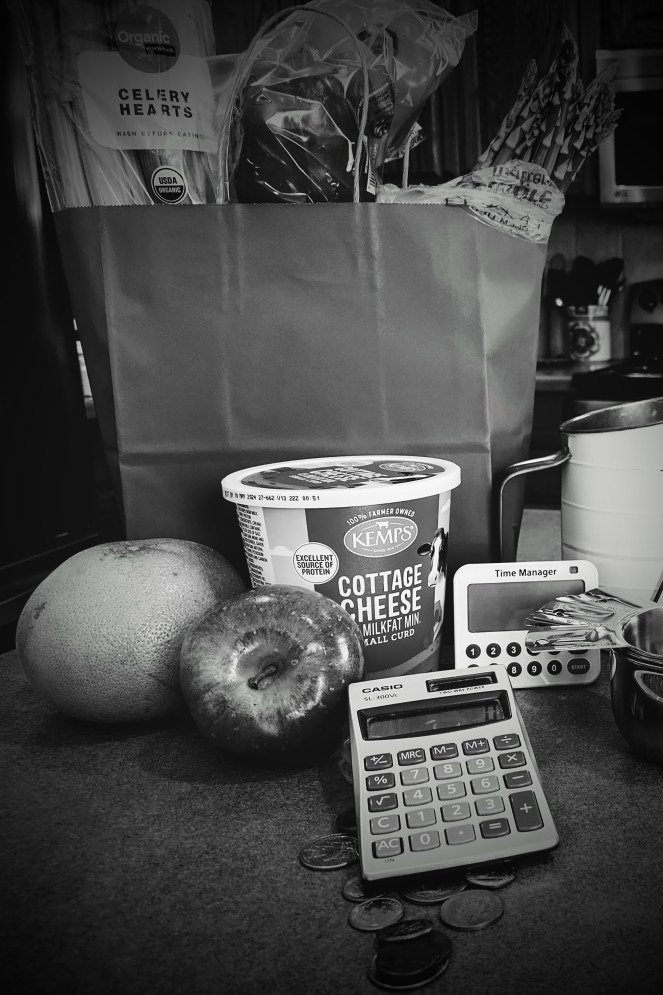
An interesting video was featured today by AgDay (Farm Journal) and PRS IN VIVO, titled “What’s It Like Inside the Mind of a Produce Shopper” (see link under “sources” below). It explored what goes on in the minds of consumers shopping for groceries. I recommend watching the video for more details on the purpose-built “grocery store” in which study volunteers shop wearing special glasses that track their eye movements as they scan the shelves. From their scanning habits experts have drawn conclusions about expectations shoppers have as they view products.

It made me realize that we, too, have access to that kind of study. We’re only a few questions away from understanding what motivates us to buy certain products. The next time you are traversing the grocery store and as you reach for this box-of-that or can-of-this, mentally interview yourself:

Why did I pick this particular product? Was it due to packaging? Placement on the shelf (it was in my eyeline – a coveted piece of real estate that producers pay a lot of money to acquire)? Is it because this brand was a family favorite (mom or grandma always bought it)?

Or are there more pragmatic reasons?

When you finish your purchases and as you check out, look in your cart and ask yourself some of the following questions:

I see that I bought mostly fruits, vegetables and fresh foods (milk, eggs) and dried staple foods (like flour, beans, pasta – the ingredients for home cooked dishes), why did I do that? Was it budget related? Am I trying to cook more at home and pay less for restaurant food, or even buy less processed and pre-made foods? Do I think of myself as health conscious and is this something of which I’ve always been aware? Or have I seen a similar concept recently on Instagram or Facebook, presented as being “good for me”?

If I see a cart of mostly processed foods, why did I choose those items? Is it because I see advertisements that remind me of these comfort foods? Or is it something I saw featured on social media? Am I eating this because I know it to be good for me, or is it an emotional choice?

There are many other questions we can ask ourselves, this is just a sample, but it is a great habit to cultivate as a prudent consumer. Being able to analyze our personal choices and recognize whether we are influenced by advertising, placement, sentiment, or even social media can help us to be more conscious about what we purchase and even save us a few pennies when we recognize a costly, but unnecessary pattern. Needs vs. wants.

Happy shopping!

Sources:

Consumer Mindset · Old School Skills

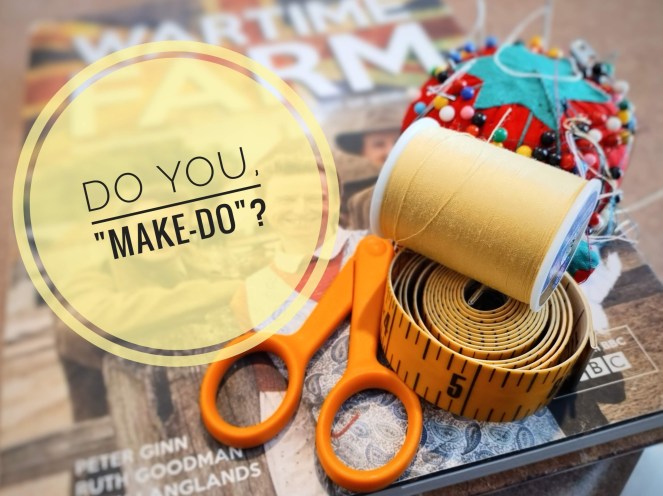
Are You “Making-Do”? – The Wartime Farm – BBC 2012

For the second time in several years, I’m re-watching the Wartime Farm, a BBC production from 2012. It follows the adventures of a team of three: historian Ruth Goodman, and archeologists Peter Ginn and Alex Langlands, as they recreate the conditions of a farm during World War Two, 1939-1945, in Britain. It is filmed on the beautiful Manor Farm, an historical park that has preserved much of late 1930s and early 40s living space and agriculture.  

I’m always drawn to these historical recreations. A genre that became popular back in the late 1990s with the Victorian House and the 1940s House (my favorite), among other historical, time-travel “reality” shows. Though in some productions the internal drama of the participants predominated, the Wartime Farm definitely does not do so (and neither did the 1940s House for that matter, much to the credit of those participating).

Tough times can produce sterling qualities

My own college research was in the WW2 era, and I have been and remain fascinated with that time when so much was on the line. We live in a similar period, though cocooned in our material plenty, we often do not recognize that fact. My own grandparents spent their teen and young adult years navigating the Great Depression and the Second World War. It left an indelible impression on their lives and lifestyles. My maternal grandparents had a Victory-style garden nearly their whole lives, though, to be fair, they had grown up the children of homesteaders, so their subsistence lifestyle predates the 30s and 40s.

There was a great pulling-together and spirit of self-sacrifice, which ultimately showed many people that they were made of tougher stuff than they had assumed. There was strength in shared purpose, and the dangers of invasion and occupation brought on a sobriety that had been lost in the excesses of the 1920s.

Aside from the greater moral lessons of the war, what I really found practical from a Prudent Consumer perspective, is the concept of “making-do” that predominated WW2 government and popular, practical literature, and a principle featured in the Wartime Farm series. This was especially so for Britain, where, as an island, they were subject to greater privations than in the U.S. Making do with what you had before the war had to carry you through to the end of it (whenever that was), or until intrepid merchant boats could get through the German blockade at sea.

Old lessons, new applications

We’re feeling a bit of this now in the U.S., with increased interest rates and the need for new trade negotiations. A dynamic that is always rough seas at first until fruitful negotiations produce a fair reciprocity in international trade. Could we end up without the flow of endless material goods from China? Or at least a slower flow? Might we have to wait on U.S. production to ramp up and then pay a bit more for, one hopes, better quality? Possibly.

In either case, the premise of “make-do and mend” or “use what you have and repair items that you might otherwise have thrown out” were hallmarks of both the Great Depression and WW2. They served people well then, and can do so now.

Three takeaway principles

A framework for applying a “make-do and mend” mentality:

  1. Think before you spend. Ask the simple question: do I already have something that will serve the same purpose as the item I want to buy? If I do, and it needs a bit of mending or repair, can I accomplish that? If not, do I know someone who can? Can I learn the repair skill from YouTube or another person?
  2. Singularize, don’t duplicate. If you have an item in one color (aside from t-shirts), do you need the same thing in five tonally harmonizing hues? No, buy the neutral one first and it will match with more things.
  3. Learn the difference between “wants” and “needs.” You might also hear these referred to as “extras” and “basics.” You can get by on basics, groceries or otherwise, but you will become wasteful if you always purchase extras. You’ll also accrue debt.

I’m sure you can think of many other applications of “make-do and mend,” and it’s a great mental exercise to practice.

And remember, it can also apply to technology! If you’re feeling overwhelmed by the constant barrage of social media, you can “make-do” with less by cutting back on the sites and apps you participate in. Delete all but the most “basic” apps from your phone screen and notice how much less you feel tied to your device.

Let me know of any additional “make-do” ideas you’ve developed in the comments section!

Sources:

Wartime Farm: Rediscovering the Skills and Spirit of World War II, Peter Ginn, Ruth Goodman, Alex Langlands, Mitchell Beazley publishers, 2012.

Wartime Farm is presently streaming for free on Tubi, as of February 2025.

    Recipes

    Ahoy there! — Almond Flour Chocolate Chip Cookies

    Gluten-free has become a health-protocol for a lot of people. Some because they have serious digestive issues and/or celiac, and others because they want to take a break from the onslaught of gluten in their diet to see if various health issues will improve along with immune system function. This cookie would qualify as gluten-free, but not dairy or egg free.

    However, I think (and this is coming from someone who must exclude a lot of things from her diet due to a histamine malfunction called Mast Cell Activation Syndrome—so I know whereof I speak) we can focus on what is not included in a recipe or dish, rather than what is included. And what is there is much more fun than what isn’t there. Abundance mentality vs. deprivation mentality.

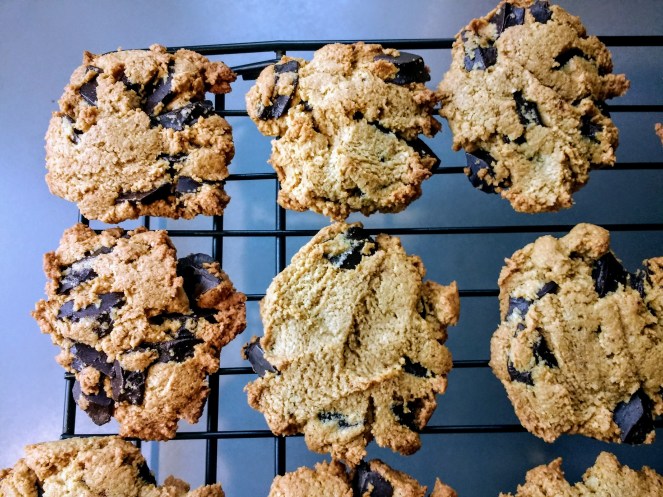
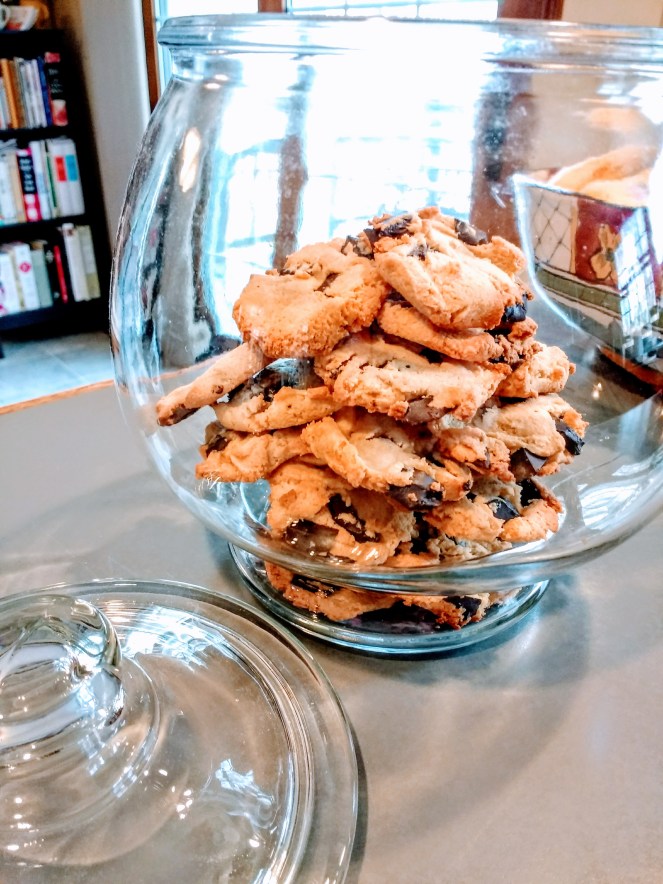
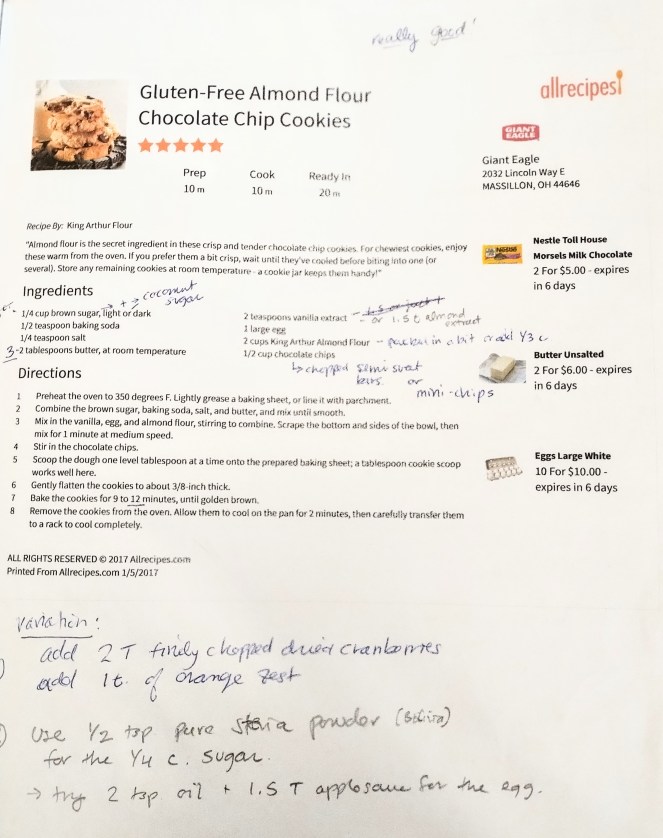
    This recipe, which I will link here < Almond Flour Chocolate Chip COOKIE RECIPE > and below, is on the All Recipes website, which is where I found it seven years ago. At our house, we affectionately call it the ‘Chips Ahoy!’ cookie because it has a similar texture and flavor to that well-known cookie product.

    Almond flour works well in certain recipes and not so in others. This can be said of most non-gluten flours. They all have their best uses. It’s worth a little investigation and typing up a little cheat-sheet to remind you which ones are best for what purpose.

    Almond flour, in this recipe, is a good substitute and produces a nice sturdy, chewy texture that sets off the flavor of the chocolate delightfully.

    Now, I’m an inveterate recipe tweaker, so I never could leave this one alone and I’ve tried this and that, as you can see in the photo of my much-marked up copy of the recipe. However, using the directions straight from the original produces a fantastic cookie, so start there and then tweak as you like.

    If you want to tweak right away, I’d suggest using (in place of the chocolate chips) 4 oz. of good quality bittersweet chocolate bar that you chop up with a sharp chef’s knife into little pieces. That way you get bits of chocolate spread out into more of the cookie dough.

    Reminder: when you begin to scoop the dough onto a cookie sheet, gently flatten the cookies, as it says in the recipe, otherwise you get almond flour haystacks and the final product won’t have as even a texture.

    Even if you don’t need to avoid gluten, this makes a fun cookie to rotate with wheat-flour variations. Almond flour has a long history as a confection and ingredient in candies, cookies and cakes, so as you enjoy each bite, take a moment to imagine all the other historical cookie snackers over time who have indulged in the delights of almond flour! And smile at your budget as it thanks you for making a recipe from scratch that can taste just as good as the store-bought, commercially processed varieties!

    Sources: Gluten-Free Almond Flour Chocolate Chip Cookies, at AllRecipes.com by King Arthur Flour, Jan. 20, 2022. Gluten-Free Almond Flour Chocolate Chip Cookies (allrecipes.com)

    Old School Skills

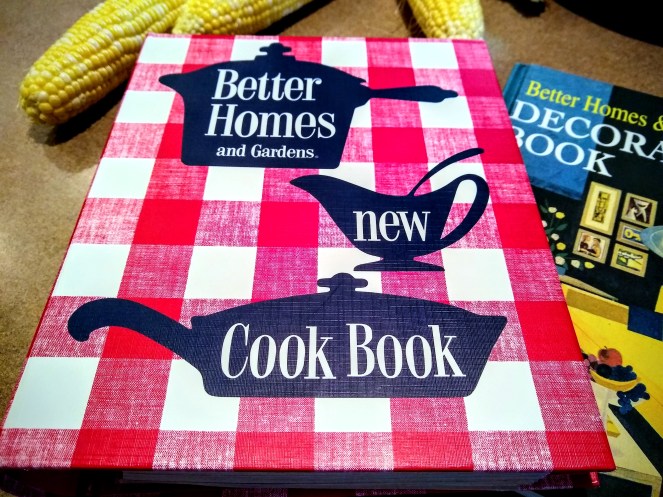
    Cooking Lessons: Menu Planning from the 1953 Better Homes and Gardens New Cook Book

    I don’t know about you, but as much as I love the endless availability of recipes on the internet, sometimes I like to take a peek inside a traditional cookbook. In particular, those from the heyday of the Home Economics movement in the early 20th century contain some surprisingly handy nuggets.

    So, what do they have to offer us now?

    One feature that I love about cookbooks of this vintage are the extensive menu planning sections. I think we’ve lost this feature in many modern cookbooks, partly because our ability to buy books has increased and those who like to cook tend to collect many cookbooks (guilty, as charged) rather than just one comprehensive volume. Niche cookbooks tend to eschew menu planning because they stick to only one flavor or type of cuisine. Also, homemaking has been denigrated and women who are solely homemakers are not a majority, so cookbooks have shifted focus to quick meals and visual ideas, rather than systematic, comprehensive kitchen science and planning.

    Practical buried treasure

    So, what does this meal planning feature look like in the 1953 Better Homes and Gardens New Cook Book?

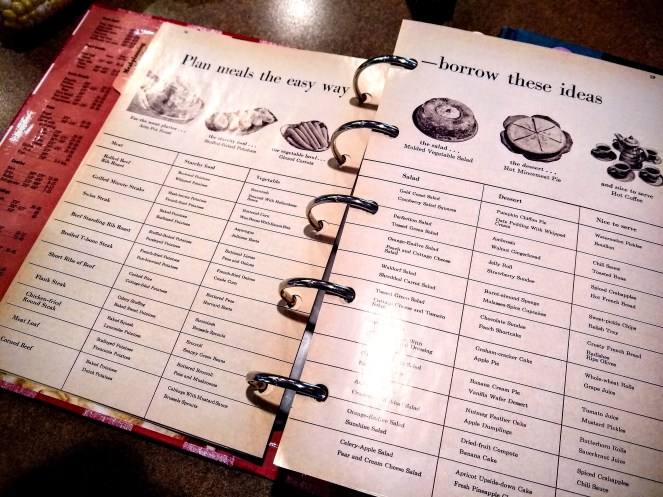
    A very clever graph, looking a lot like what we would consider a spreadsheet page. On the left are the main dishes, mostly meat, then the following categories with two options each for starchy foods, vegetables, salad, dessert, and special extras called “nice to serve.”

    There are about 18 or so pages of these menu ideas. They cover dinner, lunches, hearty breakfasts, and “oven meals”—where all dishes can be cooked in one oven, meals for large groups, and lunch-box meals. In addition are nutrition guidelines (which continue to have much to offer…i.e. eat your veggies!), food-storage, and directions for meal planning.

    Let’s take a for-instance. From the menu spreadsheet, one of the “Meat” options is the familiar standard, Meat Loaf, in the accompanying “Starchy food” options are Scalloped Potatoes or Franconia Potatoes (browned, or roasted). From the “Vegetable” column are Buttered Broccoli and/or Peas and Mushrooms. Next is the “Salad” category, with a choice of Orange-Endive Salad or Sunshine Salad (a gelatine salad with pineapple, carrots and pecans). Finally, “Dessert” offers two options, Dried-fruit Compote or Banana Cake, and the “Nice to serve” column suggests Spiced Crabapples or Chili Sauce (for the meat loaf, presumably).

    Nutrition

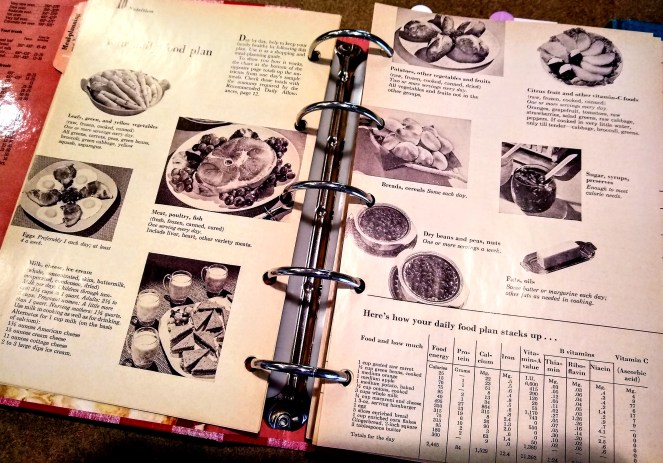
    Here’s where the Home Economics movement hit its scientific peak in meal planning. If we take a look at the “Daily Food Plan” pages in the 1953 BH&G Cook Book we see where our sample meal fits right in. It calls for meat/poultry/fish once daily…so there’s our meatloaf. Next, we have the potatoes/veggies/fruits category, so check mark the potatoes and broccoli and/or peas in our menu plan.

    Our Sunshine Salad (remember the carrots and pineapple) and/or the Orange-Endive Salad, easily covers the citrus fruit/other Vitamin-C foods category. The carrots in the Sunshine Salad, and the endive in the Orange-Endive Salad could also cover the leafy/green and yellow vegetables requirement. The desserts will include some dairy, so there’s that, and sugar and oil, check and check. Bonus points for the “regularity” fiber in the Dried-fruit Compote dessert option.

    A lot to think about, and somewhat complicated to plan for, which is the genius of the meal planning spreadsheets!

    Oh, what a loss when we lost Home Ec

    The Home Economics movement began in the last half of the 19th century and was in its stride until the middle of the 20th century, when politics, space-race science, women’s liberation movements, and other policies voided funding for home economics departments in colleges and high schools alike. Which is really a shame because there were brilliant scientific and practical minded women who provided a lot of really fundamental knowledge and disseminated it through the educational system.

    If you want to know why there are such things these days as “adulting” classes that teach the most seemingly mundane kitchen and household tasks to those fifty and younger, your answer is that the home economics movement was defunded in the 60’s and 70’s. Otherwise, they would probably have learned those things at school, if not from their parents…. which is another story.

    One of the things the home economics movement did best was to make your time in the kitchen efficient, hence the meal planning charts in the 1953 BH&G Cookbook. If you have a spring of ideas at your fingertips, you are more likely to create meals that are both tasty and varied, incorporating a healthy variety of vegetables and fruits as well as various meats, dairy, starches, and other protein sources (as we saw above). With a plan in hand, you don’t have to stress, you can just get on with today’s meals, and your shopping trips will be carefully curated for just the ingredients you need for the week’s meals.

    Take a moment and mine your own collection of cookbooks, of a certain vintage, for menu plans. Which ones strike you as being useful today? Which vary in unusual ways from what we think of as typical meals nowadays? Please comment below!

    Sources: Better Homes and Gardens New Cook Book, Meredith Publishing Company (reprint), 1953. Better Homes & Gardens New Cook Book: Better Homes and Gardens: 9780696222122: Amazon.com: Books

    Product Reviews · Uncategorized

    Worth the Investment: GreenStalk Planter Review

    (Amazon affiliate link below.)

    Gardening is such a highlight of the summer! Even better if your garden produces both beauty and edible produce.

    I’ve moved a lot through the years and not every location has adequate sunlight or soil conditions for in-ground gardens. Soil can be improved, but sunlight has to be there or you simply can’t produce fruit.

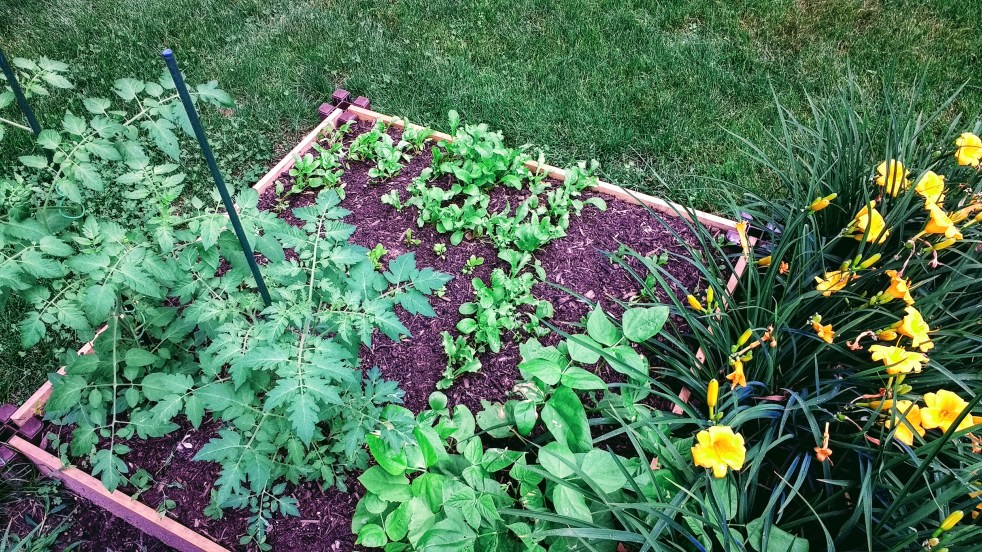
    After a recent move, our new house had a bonus, a pre-existing raised bed! Alas, it is in a location with significant shade. We planted it this year, but are rapidly realizing that only plants that can tolerate cool or partial-shade conditions will thrive, like lettuce, leafy greens, some bush beans, etc.

    But, in the sunlight department, our part of eastern South Dakota has plenty in the summer, so on our deck, which is 12 feet off the ground, we get more than enough sun, perfect for growing in containers. However, container gardens can be tricky. They dry out easily and require daily attention or they will die very quickly.

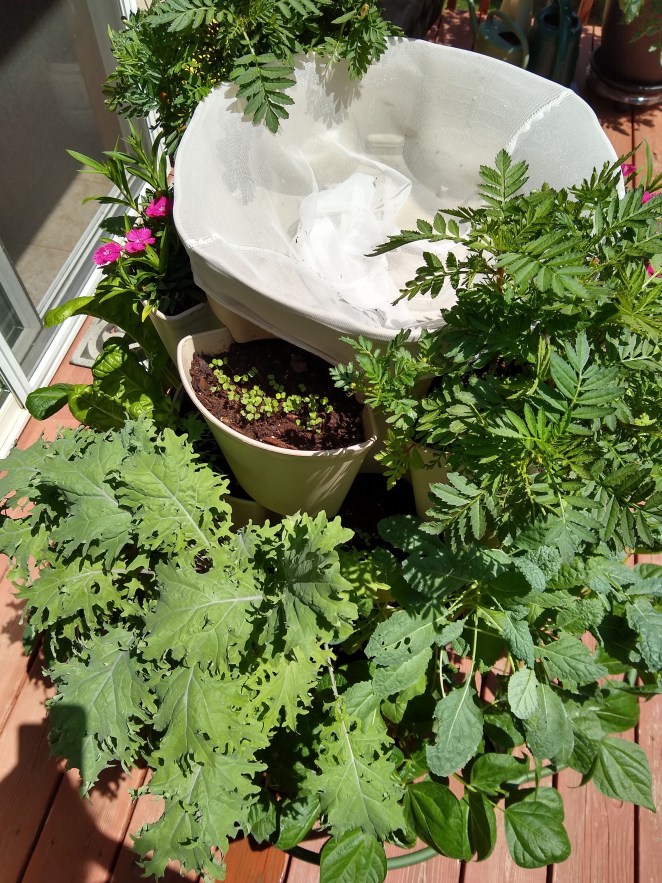
    A friend (who is a talented gardener) presented me with the gift of a GreenStalk planter several years ago and this summer was my second year to use it, more extensively even than last summer. For those unfamiliar, a GreenStalk is a multilevel vertical planter with a central system of watering reservoirs in each level, filled from the top. Each layer has six pockets in which you can plant various vegetables and flowers.

    I’ve really been impressed with the GreenStalk company which is based out of Tennessee. They are very helpful and have an active Facebook forum on which members can share ideas and ask questions. They often run sales, as well. You can purchase from their website, or on Amazon, such as this offering (affiliate link): https://amzn.to/43kfMJP

    The planter itself is very sturdily built, made in America. From images on the Facebook forum they can take a spill and still bounce back, some have even survived hail and strong windstorms, but you do have to be strategic where you set them up. The tiers come in large (original) and smaller (leaf) size pockets and can stack up to 5 and 7 layers, respectively. I mix my tiers and keep them at 3 or 4 layers since I have a windy deck.

    The GreenStalk company offers a variety of bases, I happen to have the roller bases and like them a lot. They continue to develop growing tools like supports, shades, and watering systems for automation (if that’s your thing) that work with the planters.

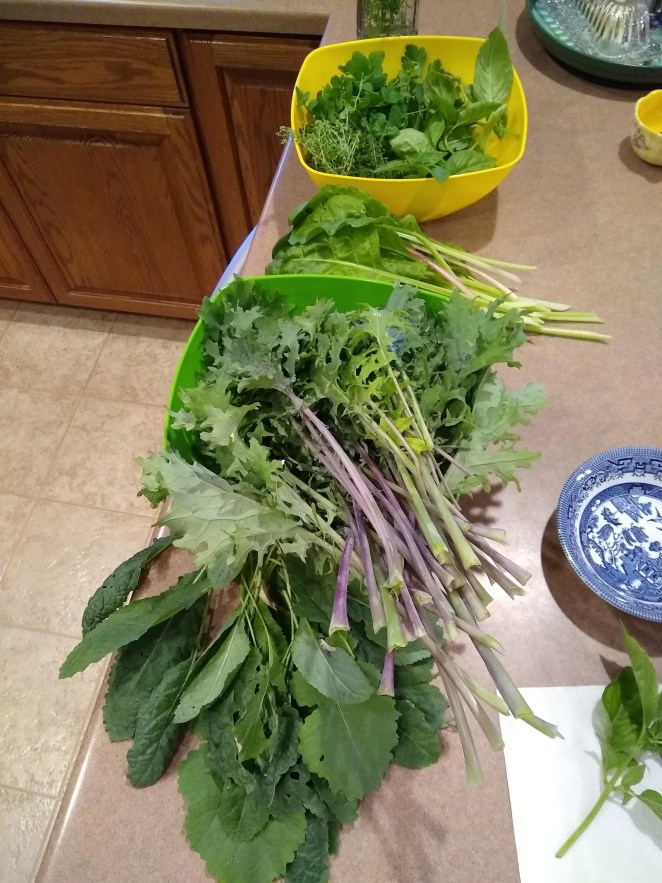
    This year’s harvest has included kale, lettuce, arugula, beans, strawberries, and various herbs. I’ve very pleased with the productivity so far and highly recommend the GreenStalk to anyone who is looking for a convenient, but productive container garden, especially with space limitations!

    Happy Gardening!

    Old School Skills

    Wise Sayings: Gardening Advice

    (Amazon affiliate link at the end.)

    It’s that time of year again. The snow is melting (well, not where I live) and the days are getting longer. The buds on the trees are starting to swell in anticipation of warmer temperatures. Birds are out and about and our minds, for us gardening types, turn to seed catalogs and what to plant, when and where.

    And so, it seems now would be a good time to explore some wise gardening sayings. Along with trowel, hod, and spade, a few handy, old-timey wise sayings can offer some surprisingly useful advice.

    #1 : “In October manure your field, and your land it’s wealth shall yield.”

    This piece of advice is an accurate one. A good dose of manure needs time to break down and the winter rest gives it plenty of time. This is especially true as I learned once when we came by some free horse manure and tried to use it right away. It was so hot and acidic that it killed many of our plants that year. That taught me!

    Another type of manure, apart from animal waste and kitchen waste, are green cover crops that you can plant, and which grow a little in late winter and then in the early spring can be turned over into the soil to incorporate the nutrients as it breaks down. This is an approach to manuring that is being applied at the large-scale farming level with great success in restoring the health of soils that have been overused and overdosed with chemical fertilizers, pesticides and herbicides.

    #2 : “Water plants well or not at all.”

    You would think that any water is better than no water, so when I read the explanation of this particular adage in my book on wise sayings (see below) it finally clicked as to why my dad always told me to “give the garden a good soaking”. If you only water a little, then the surface moisture will cause the plants to develop shallow roots. A good hearty soaking gets the moisture down into the soil and the plants will reach downward to develop a stronger root network.

    #3 : “Plant pears for your heirs.”

    Some fruiting plants can produce in three or four years, but others take a longer time. This is true for pear trees. And it gives food for thought, planting a garden or an orchard teaches us that immediate gratification is not the way of the Creation. There is great wisdom in patience and learning to commit to the long-term rather than get a quick return in the short-term (the financial sector could use this lesson).

    It also teaches altruism. If you plant a pear tree you are doing the work of watering, feeding and protecting a plant that probably will not provide you with much during your lifetime, but it will provide for those who come after. It is a selfless act and one that teaches us that sometimes you put in all the work and toil and sacrifice and you never reap a reward in this life. Life is more meaningful if we take that lesson to heart.

    So there are three interesting wise sayings to chew on, and tuck in your mental gardening shed for later use.

    What other wise sayings or maxims have you heard through the years that have helped you in your gardening adventures? Please share in the comments below here on the blog, or on Facebook.

    Sources: Wise Words and Country Ways: Traditional Advice and Whether It Works Today by Ruth Binney, 2004 (If you would like your own copy, please consider using the following link to purchase. I receive a small commission from Amazon of any purchases through this link: https://amzn.to/3JD4tFY)

    Recipes

    Abelskivers : Travel by Recipe

    (I am an Amazon Associate and as such I earn a small commission from any qualifying purchases that are linked below.)

    Sometimes we underestimate the value of a stovetop. Did you know that it can substitute for a jet aircraft?

    Abelskivers ready to eat!
    Photo: Amanda Stiver

    No, this isn’t some crazy do-it-yourself-transformation project a la Red Green, with the help of a little duct-tape. But, in fact, you can travel by stove-top, or more accurately travel by recipe.

    Exploring the history and cultures of the world is high on the “bucket” list for many people, but low (or no) budget travelers have to fulfill the ambitions and imaginations of our hearts by re-thinking global exploration.

    Oftentimes, on a trip to a new culture or location one of the resounding experiences that fills our memory is the unique, flavorful and unfamiliar foods that we encounter. The scents and textures, flavors and colors of that culture come to us through the sips and bites we take while visiting.

    Would Paris be as romantic if they served Kellogg’s Cornflakes and instant coffee instead of freshly pressed café au lait and croissant? Certainly, it would diminish the romance.

    Would a visit to Israel be as redolent of its biblical heritage if you substituted steak and potatoes (though delicious in their own right) for the multitudinous fresh vegetables, salads, and meat dishes spiced with the historical herbs and spices of the Mediterranean world that have come to be so closely associated with that place? I dare say not.

    Finish with a dusting of powdered sugar.
    Photo: Amanda Stiver

    Yet, the recipes of both places can be replicated in your own kitchen…

    My chosen destination turned out to be Denmark via a dish also shared with Scandinavia and North Germany. And my vehicle? Abelskivers! A puffy, round sweet pastry that tastes much like a pancake. Some recipes use yeast and others using baking powder as the leavening agent. They may or may not be filled with jam (we tried both raspberry and orange marmalade) or Nutella, and the final product is served lightly dusted with powdered sugar.

    Each hole is filled half-way with batter, then as they cook, you turn them by quarter-turns till fully cooked.
    Photo: Amanda Stiver

    I’ve made them twice so far. Once as a dessert. And the other as a brunch pastry. Both were tasty and there is a peculiar urge to gobble every one in sight, partly because they are so cute.

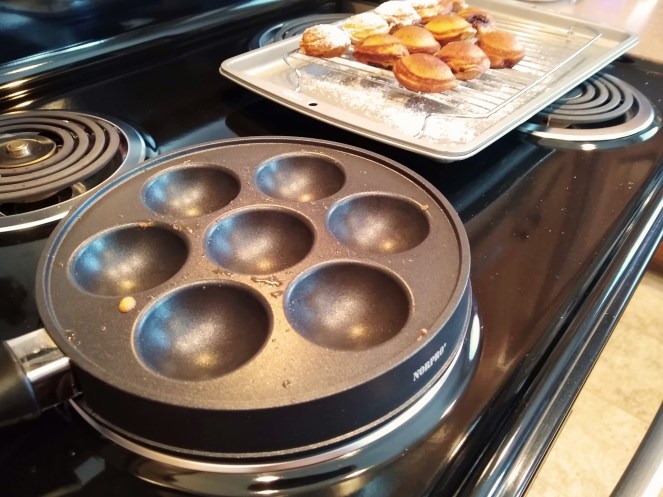
    To tackle this recipe you will need a specialized pan, there is no way around that. It’s a circular pan with round half-circles molded in (these you fill with batter). I chose a non-stick variety so as to avoid hassling with clean-up.

    Photo: Amanda Stiver

    My pick was the Norpro brand that I found on Amazon. It is sturdy cast aluminum, and I’ve used it for two batches thus far and it works very well and is quite substantial. Some other brands are more hefty and a bit pricier, but this one is solid and easy to clean. If you are looking for your own pan, here it is: https://amzn.to/3XKG1Gv  (This is a paid link – I’m an amazon affiliate and get a small commission if anyone makes a purchase through this link.)

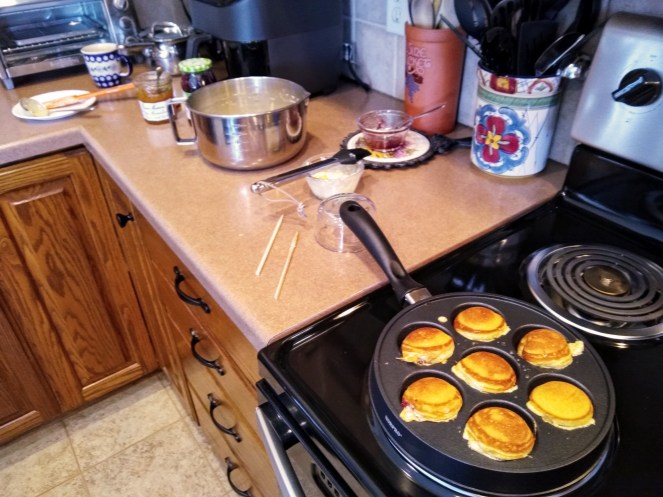
    It does take some technique and a long wooden skewer is essential for carefully turning the batter as it cooks, quarter-turns create a nice round ball. If you make mistakes, remember, they are still edible! Just eat the evidence!

    My cooking station in action. Ingredients read to go, including wooden skewers for turning.
    Photo: Amanda Stiver

    I’ve included a couple of recipe variations below. I have tried the first one, and found I liked it best, it uses baking powder as a leavening agent. I have not tried the second, but it is similar to one I did try and it uses yeast and is quite rich, best for when you have lots of people to share it with, just in case you’re tempted to eat too many.

    Recipes:

    “Ebelskivers (Danish Pancakes) With Lingonberry Jam Recipe” by Carrie Vasios Mullins, June 2, 2020. https://www.seriouseats.com/ebelskivers-danish-pancakes-lingonberry-jam-recipe

    “North German Pancake Balls” by germanfoods. https://germanfoods.org/recipes/north-german-pancake-balls/

    Quick Tips

    Tip: Cooking?…Clean As You Go!

    Do dishes pile up while you’re cooking a recipe? Especially one that’s a little involved and requires a whole platoon of mixing bowls, measuring cups, and spatulas?

    Photo: Amanda Stiver

    Do icky, sticky spoon splotches begin to re-surface your countertop like stalagmites growing on a cave floor? Does all the joy of researching and preparing a new dish evaporate as you survey the mountains of messy, but necessary debris awaiting your attention as soon as the casserole goes into the oven?

    Then you need this basic maxim my grandma passed on to my mom and to me.

    Clean as you go!

    Earth shattering? No, but it does make cooking a little bit less of a chore.

    It took me a while as a fledgling cook to appreciate this concept, but cleaning a bit here and there as you let the bread rise, or the yeast proof, the dough refrigerate, the meat marinate, or the next batch of cookies bake means that in the end, you only have a small amount of final clean-up to tackle. And, more importantly, you can focus on enjoying and sharing the goodies!

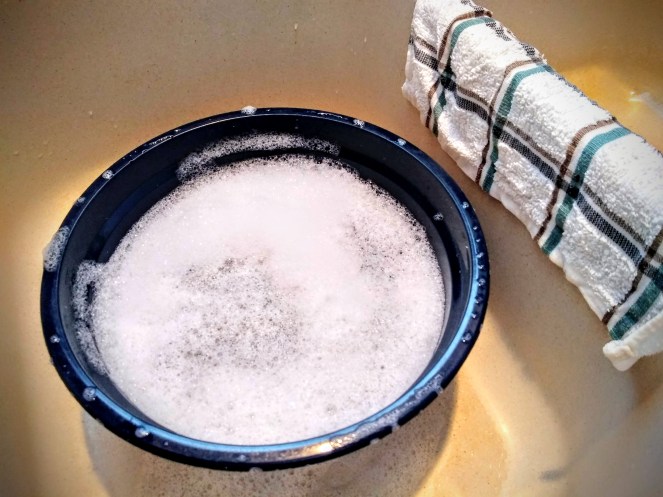
    Grandma kept a dishpan/big bowl full of warm, soapy water in the sink and as she went she placed soiled utensils there to soak until she came to a logical break in the recipe, then she cleaned those dishes, rinsed and left them to dry. Sometimes, if you are a one-measuring spoon set household, it’s essential to clean a utensil and use it again during a recipe.

    So, there you are! Keep your soapy water handy and clean as you go!

    Keep a shiny penny and a positive thought!

    Sources: My grandma via my mom

    Recipes

    Meatloaf: Versatile Kitchen Standby

    I once read that ten basic recipes are the foundation of a cook’s repertoire. With variations, these recipes are the dependable standbys of a weekly menu plan. They take away the repetitious and sometimes draining question: “What should I prepare today?”

    Photo: Amanda Stiver

    Just like a good restaurant with an enjoyable, but predictable menu, you know what to expect. Novel culinary adventures are fun, but there is also something to be said for the pleasant contentment of predictability, knowing what’s coming and looking forward with anticipation to a familiar and delightful dish.

    One dish that fits the bill for the 10-recipe repertoire is meatloaf. It is a jack-of-all-trades recipe that has enough built in flexibility to allow variation without sacrificing form, ie. mushy meatloaf.

    Let’s touch on versatility. Prudence in the kitchen expects a recipe to have easy variations. Meatloaf can facilitate this requirement with a variety of spices, or added vegetables, or sauce on top, maybe even cheese as a component. The possibilities are many.

    It’s also a multi-purpose dish, and can have a place at breakfast, lunch, or dinner. If ground beef is low, meatloaf can take the form of any ground meat, poultry, or canned fish. Salmon loaf, well executed, is a delicious dinner option.

    Meatloaf is also a budget friendly dish. It can be made economical, meat being the most costly ingredient, by cutting down on that component and increasing the oats, crackers, breadcrumbs/cubes, or other starchy carbohydrate component. Also, vegetables can be increased to a degree to make up for a decrease in meat. Beans would be especially effective in this way because they preserve some of the protein content.

    Meatloaf in various forms is found in a many cultures. The Scottish have Haggis (using offal-organ meats from sheep, minced, mixed with vegetables and oats and cooked in a sheep’s stomach), in France and England there are dishes like terrine, which may include whole eggs, and whole vegetables layered in the meat, and sometimes the carbohydrate component is included or left out. There are meatballs from the Scandinavian cuisines, and kefta from the Persian/Middle Eastern historical cuisine. The list could go on. Many interesting flavors to explore.

    Meatloaf even has cousins, shepherd’s pie, stuffed peppers (or other vegetables), or ground beef pie. Wherever inspiration strikes.

    As a recent article I read (see below) made note of, meatloaf became an American culinary staple during the Great Depression of the 1930’s, for many of the reasons listed above. Versatility, economy and stretching a dwindling meat supply due to high prices.  

    When you look through your repertoire of recipes, as a prudent consumer, keep an eye out for recipes like meatloaf, that offer ample variety and can save a penny here or there. Cultivating these sometimes humble and predictable recipes gives you economical allies when times are tight!

    Please share your meatloaf variations and memories in the comments below or below the Facebook post of this article!

    Keep a shiny penny and a positive thought!

    Sources: “A History of Meatloaf, Long May It Reign,” by Frank Bruni and Jennifer Steinhauer, March 6, 2017. https://www.bonappetit.com/story/history-of-meatloaf